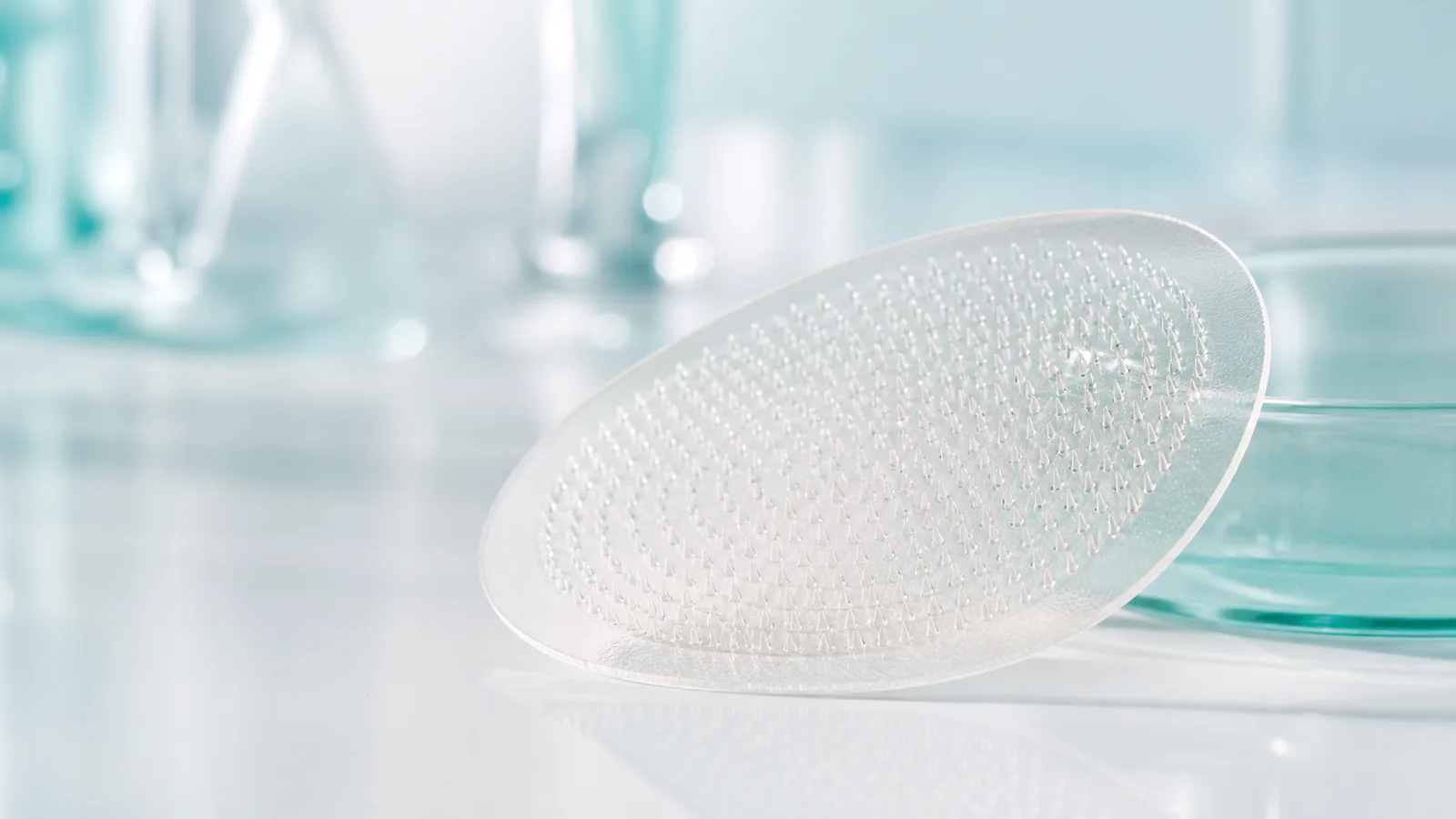
Quality & ManufacturingA B2B buyer guide to microneedle patch specification: how to evaluate which identity, appearance, dimensions, array integrity, content, microbiological and packaging attributes determine batch acceptance, request meaningful evidence, and work toward a release standard that both brand and factory interpret consistently.
Read guide →Customization & EngineeringA B2B buyer guide to microneedle patch primary secondary packaging: how to evaluate which packaging components directly protect the product and which support presentation, information and logistics, request meaningful evidence, and work toward a packaging system designed from product protection outward.
Read guide →Customization & EngineeringA B2B buyer guide to microneedle patch desiccant packaging: how to evaluate whether pouch barrier and product moisture sensitivity require a desiccant and how its capacity is chosen, request meaningful evidence, and work toward a packaging decision supported by moisture data.
Read guide →Customization & EngineeringA B2B buyer guide to microneedle patch pouch seal integrity: how to evaluate how material, seal window and inspection protect the moisture-sensitive array through distribution, request meaningful evidence, and work toward a primary pack with controlled closure performance.
Read guide →Customization & EngineeringA B2B buyer guide to microneedle patch production defects: how to evaluate how filling, drying, demolding and handling losses affect sellable yield and supply planning, request meaningful evidence, and work toward a realistic cost and delivery model based on released units.
Read guide →Customization & EngineeringA B2B buyer guide to automated vision inspection microneedle: how to evaluate whether camera inspection can consistently detect missing, bent, incomplete or contaminated needles at production speed, request meaningful evidence, and work toward an inspection system whose capability is demonstrated.
Read guide →Customization & EngineeringA B2B buyer guide to microneedle tip sharpness inspection: how to evaluate how tip geometry is defined, imaged and sampled rather than judged by a marketing micrograph, request meaningful evidence, and work toward a reproducible sharpness control linked to the approved design.
Read guide →Customization & EngineeringA B2B buyer guide to microneedle mold validation: how to evaluate how a new or repaired mold is qualified and kept capable through its service life, request meaningful evidence, and work toward traceable tooling that remains within the approved geometry.
Read guide →Customization & EngineeringA B2B buyer guide to curved facial microneedle patch design: how to evaluate how patch contour, array zoning, backing flexibility and adhesive placement fit a moving three-dimensional surface, request meaningful evidence, and work toward a manufacturable patch that sits consistently on the intended area.
Read guide →Customization & EngineeringA B2B buyer guide to microneedle patch application pressure: how to evaluate how the product and instructions create repeatable contact without requiring unrealistic user technique, request meaningful evidence, and work toward instructions and design that work together under normal use.
Read guide →Customization & EngineeringA B2B buyer guide to microneedle patch protective ring: how to evaluate how users can remove the patch from its tray and apply it without touching or crushing the array, request meaningful evidence, and work toward a protective feature that reduces handling damage.
Read guide →Customization & EngineeringA B2B buyer guide to microneedle patch adhesive backing: how to evaluate how backing stiffness, adhesive zone and release liner support insertion, wear and clean removal, request meaningful evidence, and work toward a backing system that supports the array and user experience.
Read guide →